Europe Tour | Autumn 2016 | Day 6
10 October 2016
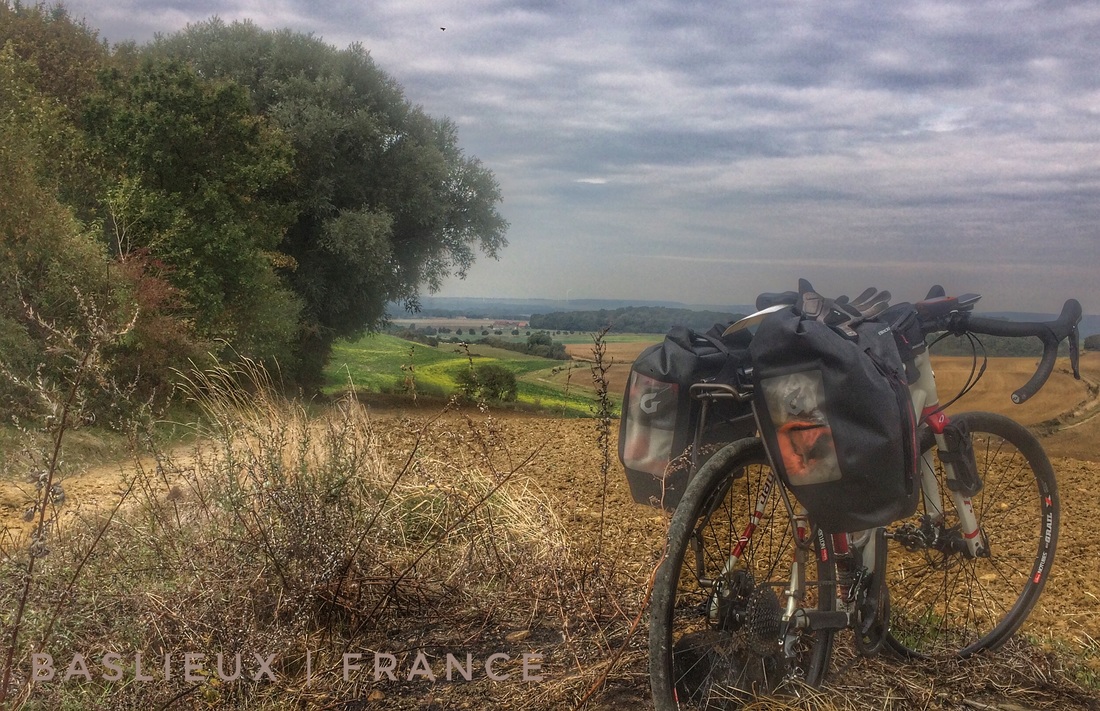
Morning ride: https://www.strava.com/activities/740220048
Early afternoon: https://www.strava.com/activities/740311009
Late afternoon: https://www.strava.com/activities/740442406
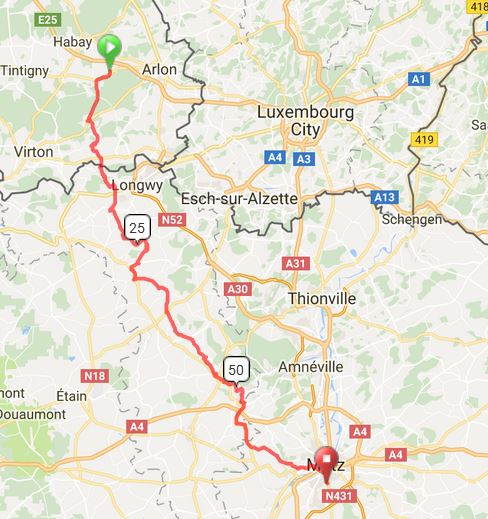
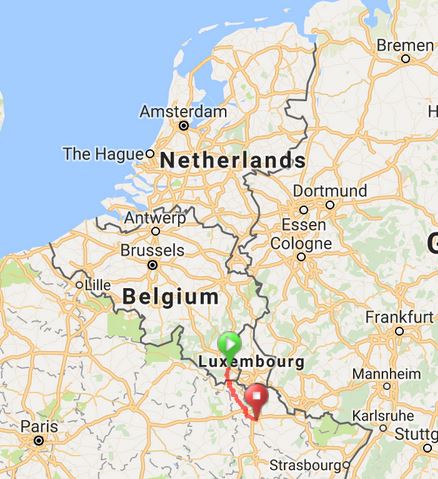
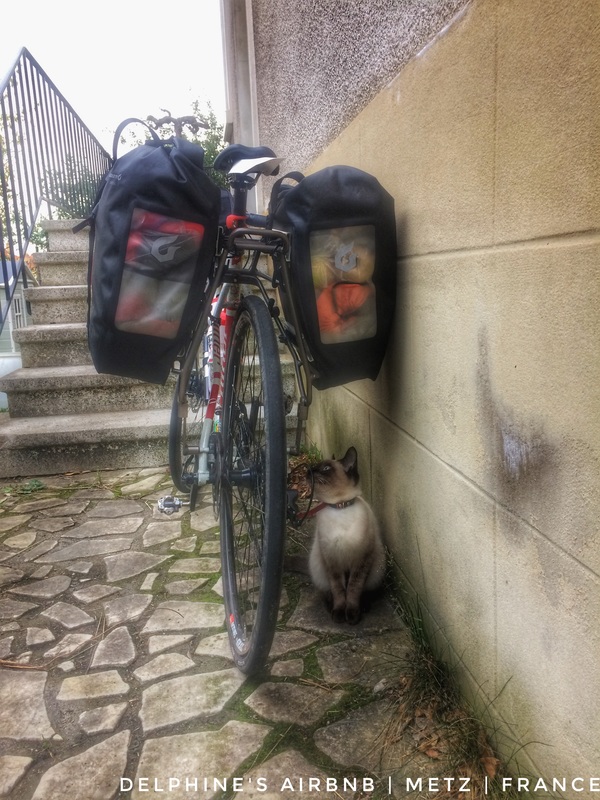
A very chilly morning, about freezing at 9 am, so I delayed another hour, chatted with Stéphanie, my host, enjoyed her French accent and drank more coffee. For the most part, today's weather was as anticipated, overcast sunrise to sunset. Yet, it never rained, a fact for which I'm grateful and will continue to be grateful for even when the sunshine is filtered by cloud cover. Cool temperatures, in the absence of rain, are excellent for cycling once the body warms up.
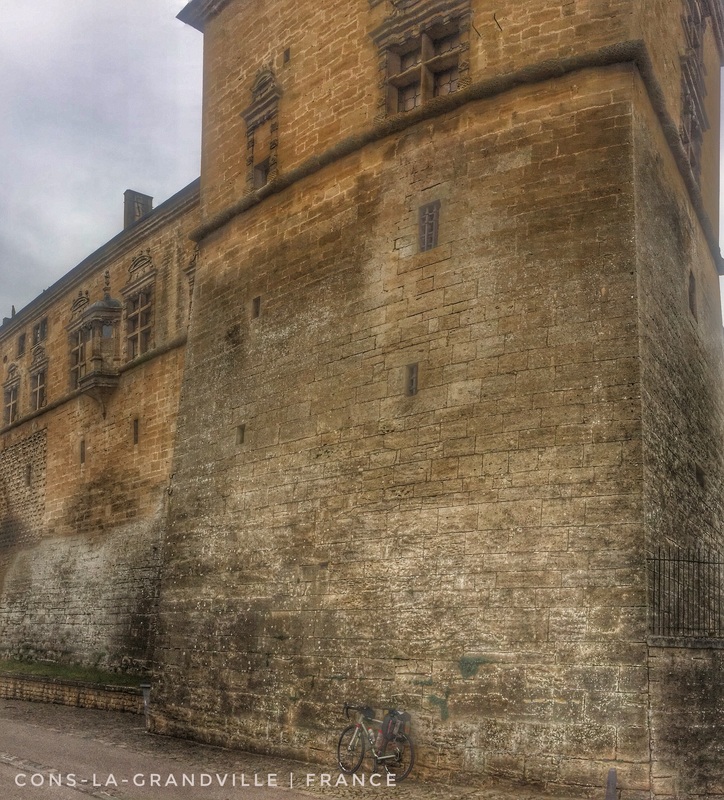
I was surprised to cover nearly 20 miles in the first hour on the road, which put me in France before noon despite my very late departure from the former château in Sampont. It was an exciting moment, arriving for the second time in my life to the country of my origin (in 2012 I visited the city of Paris for seven days) and the farthest country to the south that I set out to visit in my original itinerary. With an impressive castle wall at the village doorstep, the moment was also dramatic, and therefore memorable forbye, as I came zipping into town along a fast descent that at once transitioned from forested slopes on either side of the road to a picture-book scene from the Middle Ages. Part of a larger Château de Cons-la-Grandville, the castle "was constructed for Dudon de Cons, son-in-law of the Comte de Chiny" in the 11th century (C.E., Common Era) and has since been rebuilt many times.
Let me briefly recall the story of my Grandfather as it was told to me by letter from him in the last decade or so prior to his passing. Of course, without those letters in hand, which are stashed away at my father's house in a box above the rafters of his garage, I'll also have to rely on memory which is, as Daniel Gilbert skillfully revealed, certainly not ideal. My Grandfather was born in Waterville, Maine, on 14 May 1914, to Henri (Henry) Breton and Mary Anne Duge (also recorded as Duggie, Dugue, and Duguay). Henry was himself born in Waterville, in 1891, the son of Napoleon Breton (sometimes recorded as Butler) and Emma LaGrange, French-Canadians who married in Lac-Etchemin, Quebec, in 1881 and immigrated to Maine a few years later, where Napoleon worked in the pulp mill. From there the family tree runs back through seven generations of Élie (Hélie) dit Bretons in Quebec to Jean Hélie (1617-1699), who left the village of Ménéac in Brittany and married Jeanne Labbé on the Île d'Orléans in 1669, one of the colonists who arrived during Louis XIV's push to populate New France between 1663 and 1673. On Mary's side the roots are Acadian: her mother, Mary Sarah Thériault, was the daughter of Fabien Thériault, who married in New Bandon, New Brunswick, in 1854, and the Thériaults of that county descend from Jehan Terriau, a farmer recruited in France for Acadia in the mid-1600s. Why Henry and Mary gave up my Grandfather and his slightly older sister, in about 1916, remains a mystery; it was years before the Great Depression, so that wasn't the cause. He was dropped on the steps of an orphanage at two years old (Aunt Sandi, pers. comm., as told to her by her father). By the 1920 census, aged five, he was a ward of the Home for Destitute Catholic Children, a Gothic building on Harrison Avenue in Boston's South End run by the Sisters of Charity. Approaching and into his teenage years he would be placed in foster homes, many of these, often with dubious results. His life was apparently difficult throughout his early years until he was able to fend for himself and escape the Catholic church and the foster homes that they arranged for him.
Along the way, it's easy to imagine what happened to my connection to France, the country of my distant ancestors' origins, by way of French Canada, and so too the origin of my Grandfather and family that followed. Although I am an American with a French nose and not much else to connect me to France, I still cannot help but wonder, when I'm on French soil, about my family's French roots. And for me, a guy that often spends far too much time in Wonderland, that was enough, castle at the bottom of a steep descent aside, to put a big smile on my face when I realized I had returned to the country from whence my ancestors set out for New France, generations before, possibly on a filthy ship, wearing filthy clothes, and grinning a smile that no one, from this century, would want to kiss!
Metz (the French pronunciation sounds like the English word "mess") has an absurd, for its richness and breadth, history including an impressive cast of famous characters dating back to the 2nd millennium B.C.E. (Before Common Era). A small sample from Wikipedia conjures up an appropriate visualization: "Before the conquest of Gaul by Julius Caesar in 52 BC, it was the oppidum of the Celtic Mediomatrici tribe. [Once] integrated into the Roman Empire, Metz quickly became one of the principal towns of Gaul with a population of 40,000, until the barbarian depredations and its transfer to the Franks about the end of the 5th century [C.E.]. Between the 6th and 8th centuries, the city was the residence of the Merovingian kings of Austrasia." And that's just roughly half of the story.
Why is it that any mention of the word Merovingian immediately takes me back to the fabulous character, by the same name, from the films The Matrix Reloaded and The Matrix Revolutions? Since I was just a click away from discovering what these Merovingians were all about, I thought I would include a little of that history as well: The Merovingians "were a Salian Frankish dynasty that ruled the Franks for nearly 300 years in a region known as Francia in Latin, beginning in the middle of the 5th century. Their territory largely corresponded to ancient Gaul as well as the Roman provinces of Raetia, Germania Superior and the southern part of Germania. The Merovingian dynasty was founded by Childeric I (c. 457 – 481), the son of Merovech, leader of the Salian Franks, but it was his famous son Clovis I (481–511) who united all of Gaul under Merovingian rule."
History and the fascinating stories that the term implies await me in all directions it seems, and the effect on the child that often looked out a window from 9 North Park Street in Franklin, Massachusetts, on the tip of his toes and wearing a onesie, is that he can hardly contain himself from riding over the next hill, to the next village, to anywhere his RLT 9 Steel and his legs are willing to take him on his autumn tour of (his plan anyway) six countries. It has already been a tour-de-force of unimagined encounters, with people from the here, now, and bygone. No doubt much more awaits in the days ahead before I complete the final pedal revolution that delivers me to where it all started at Bismarckstraße 77 in Hamburg.
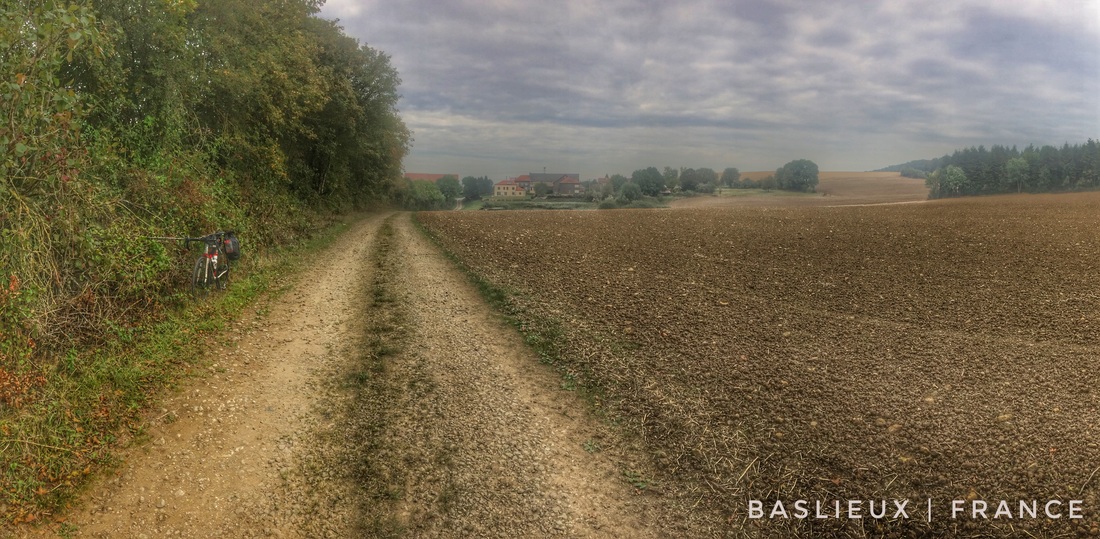
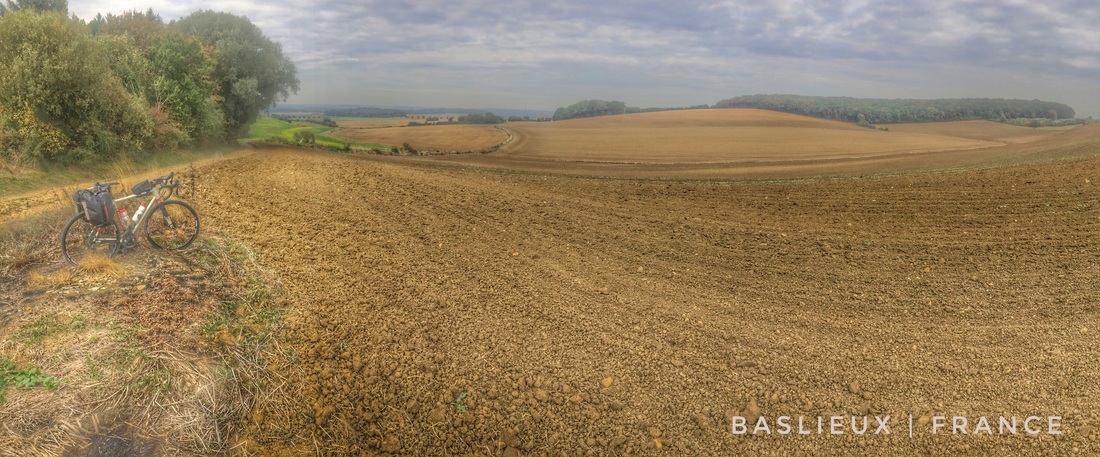
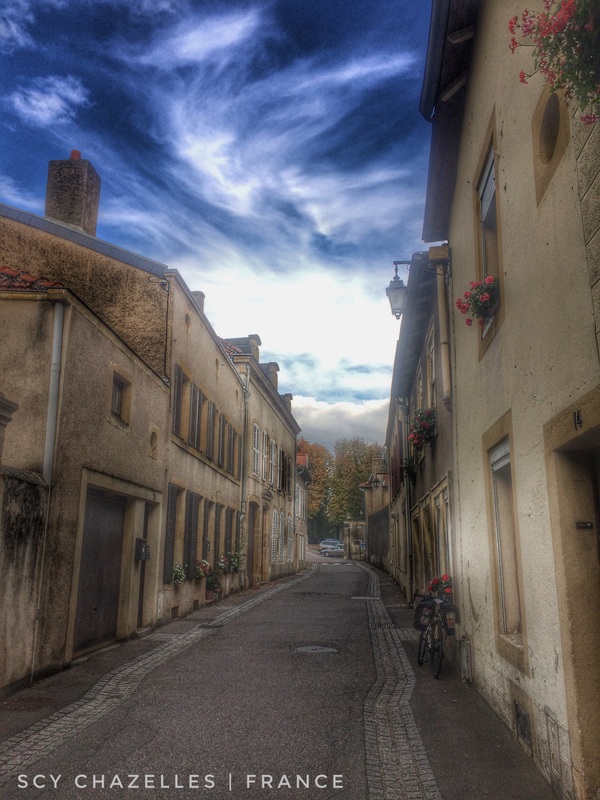
After five consecutive days riding over 100 miles, I thought I'd dial back my speed today, shoot for about 60-70 miles, and finish early, with enough time perhaps for a load of laundry, which is spinning now. The road from the first French village to the city of Metz, roughly the size of Fort Collins, was often country road with only a few exceptions. The terrain was hilly, sometimes very steep, especially exiting villages, otherwise gently rolling most of the way.
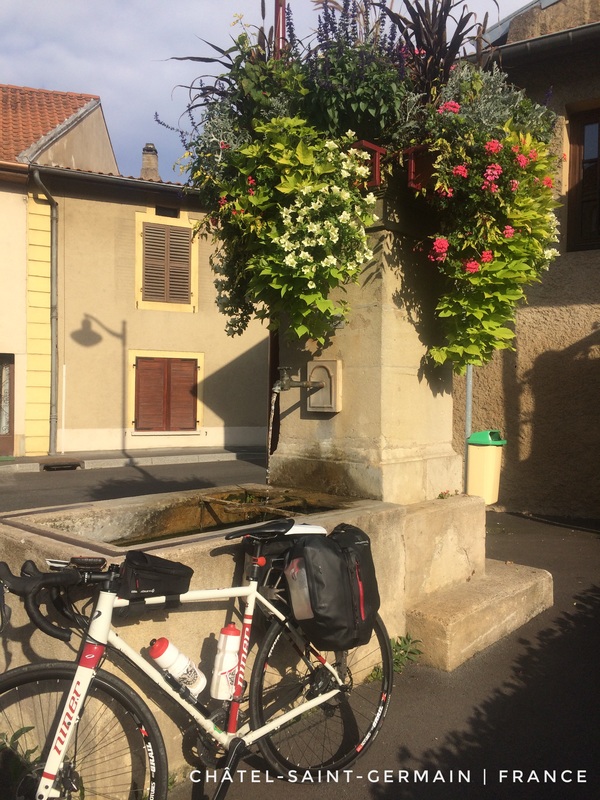
I met a Frenchman 30 years into retirement, a sturdy, full-of-life cyclist named Herman (pronounce air-mon or just eh-mo), at the water spigot I photographed not far from Metz. He encouraged me to ride to Strasbourg, France, rather than other possibilities that I had in mind and mentioned to him. Based on our exchange of ideas, all told about a 20-minute conversation, I'm going to do some thinking this evening, check some distances, etc., and perhaps hatch another revision to my already revised itinerary in the morning. My plan, as of yesterday, was to follow the Moselle River Cycle Route from Metz to Koblenz, Germany.
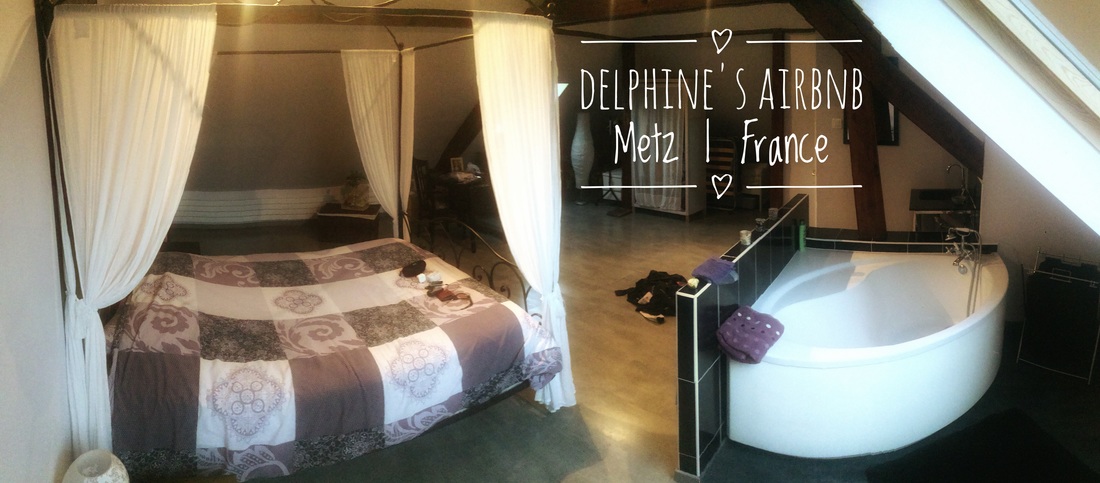
A beer opened and another on the docket, so no bonne nuit to you for about another two hours. Instead, I bid you a bonsoir, a good evening from Delphine's exceptional place in northeast France in the ubiquitously historic city of Metz, a city with links to the "political thinker Alexis de Tocqueville" among other notables. Vive la France!